Administration

Business Continuity and Disaster Recovery in Azure SQL 

Business continuity is a foundational requirement for database platforms. Azure SQL provides multiple layers of resiliency that protects your data, maintains availability, and enables recovery from both localized failures and large-scale regional outages. (Download Presentation from Data Saturday Chicago) Let’s break down how the concepts of Business Continuity and Disaster Recovery (BCDR) works in Azure SQ. We…


Using Database Instructions with GitHub Copilot

Microsoft recently announced updates and fixes for SSMS 22.3. While the release included many quality-of-life fixes, it also introduced a deceptively powerful addition called Database Instructions. This feature stood out to me as it can fundamentally changes how GitHub Copilot understands your database, not just its schema, but its meaning….


TempDB Improvements in SQL Server 2025

TempDB has consistently been regarded as one of the most essential and, historically, overlooked components within SQL Server. When TempDB goes wrong, it rarely fails quietly. A single runaway query, poorly designed report, or unexpected workload spike can consume TempDB space and bring an entire instance to its knees. With…


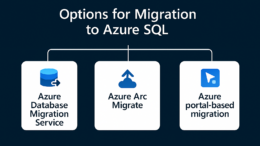
Options for Migration to Azure SQL

With the retirement of the Data Migration Assistant (DMA) on July 16, 2025, and the retirement of Azure Data Studio in February 2026, what tools do we use to assess and migrate databases to Azure SQL? The new SSMS 22 Hybrid & Migration Component only has options for On-Premises migration….


Accelerating SQL Server Migration

Migrating SQL Server databases to the cloud has traditionally been a complex, time-consuming process. But with Microsoft’s new unified migration experience for SQL Server enabled by Azure Arc—now in public preview—the journey to Azure SQL Managed Instance is faster and simpler than ever.


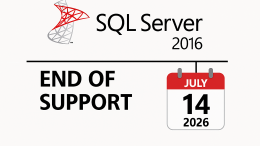
Modernize and Secure Your SQL Server 2016 Workloads

Microsoft has just announced new guidance and tools to help organizations protect and modernize their SQL Server 2016 workloads as the product approaches its End of Support (EOS) on July 14, 2026. What does End of Support mean? Microsoft Lifecycle Policy offers 10 years of support (five years for mainstream…