
Filtering Records by Numbers
How to use the WHERE statement to filter records when the value is a number or integer data type in a T-SQL statement.
How to use the WHERE statement to filter records when the value is a number or integer data type in a T-SQL statement.

How to use the WHERE statement to filter records when the value is a character data type in a T-SQL statement.

How to use the WHERE statement to filter records when the value is either a Date or a Time in a T-SQL statement.

How to use the WHERE statement to filter records when a value IS NULL or IS NOT NULL in a T-SQL statement.
How to use the ORDER BY statement to sort records in a T-SQL statement in both ascending and descending order.
In this post, we discuss how to use the GROUP BY and HAVING clause in a T-SQL statement and how to use them with aggregate functions.
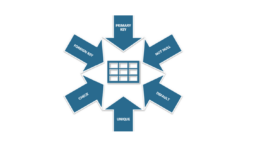
Restricting data by using Table Constraints in SQL Server. What are the different table constraints in SQL Server?
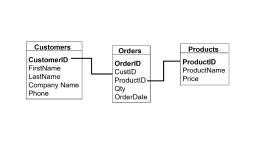
Understanding the difference between Parent Tables and Child Tables and the difference between Primary Keys vs Foreign Keys.
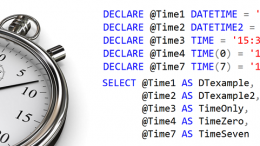
Explore the importance of working with time precision. Learn how the TIME data type can optimize your data storage efficiency.
What is a SQL Function and how to use a function in a T-SQL statement? We use the GetDate() and LEFT() functions as examples.